Notebook entry
2026.08.31 / RETATRUTIDE-
What Is Retatrutide? Mechanism, Phase 3 Results and Approval Status
- Field
- Research
- Logged
- 31 August 2026
- Reading time
- 14 min read
- References
- 15
- Source language
- EN
- Identifier
- TPL.2026.4153

01
Summary
Retatrutide (LY3437943) is an investigational triple hormone receptor agonist at the GIP, GLP-1 and glucagon receptors. What the peer-reviewed trials show, how the 2026 topline Phase 3 results should be read, and why it is approved nowhere.
02
Methods
Desk review: published literature, manufacturer documentation and analytical certificates are read side by side. Claims without a traceable reference are marked as open questions, not conclusions.
03
Results
Evidence status — checked 1 September 2026
Retatrutide is an investigational peptide that activates the GIP, GLP-1 and glucagon receptors.[01][15] Peer-reviewed trials support effects on body weight and glycaemic control,[02][03][04] but most 2026 Phase 3 obesity results remain company-reported topline data awaiting full peer-reviewed publication.[06][09][11] Retatrutide is not approved by the FDA or any other regulatory agency.[13][14]
This page is for educational purposes. It is not medical advice, a dosing guide or an endorsement of products sold as retatrutide.
Quick answer
Retatrutide, also known as LY3437943, is a single investigational peptide that acts as an agonist at three receptors: the glucose-dependent insulinotropic polypeptide (GIP) receptor, the glucagon-like peptide-1 (GLP-1) receptor and the glucagon receptor.[01][15] It is most accurately described as a triple hormone receptor agonist — not a "triple incretin", because glucagon is not an incretin, and not "GLP-3", which is not a scientific drug class at all.
A peer-reviewed Phase 2 trial in adults with obesity reported mean body-weight reductions of up to −24.2% at 48 weeks versus −2.1% with placebo.[02] A Phase 3 trial in type 2 diabetes, TRANSCEND-T2D-1, was published in The Lancet in 2026 and reported statistically significant improvements in HbA1c and body weight compared with placebo.[04] The large 2026 Phase 3 obesity results (the TRIUMPH programme) have so far been released by the manufacturer as topline results and congress presentations rather than full peer-reviewed papers.[05][06][09][11] Retatrutide is investigational and not approved anywhere; Eli Lilly has said it plans to submit a Biologics License Application to the FDA in the first quarter of 2027.[06][14]
What is retatrutide?
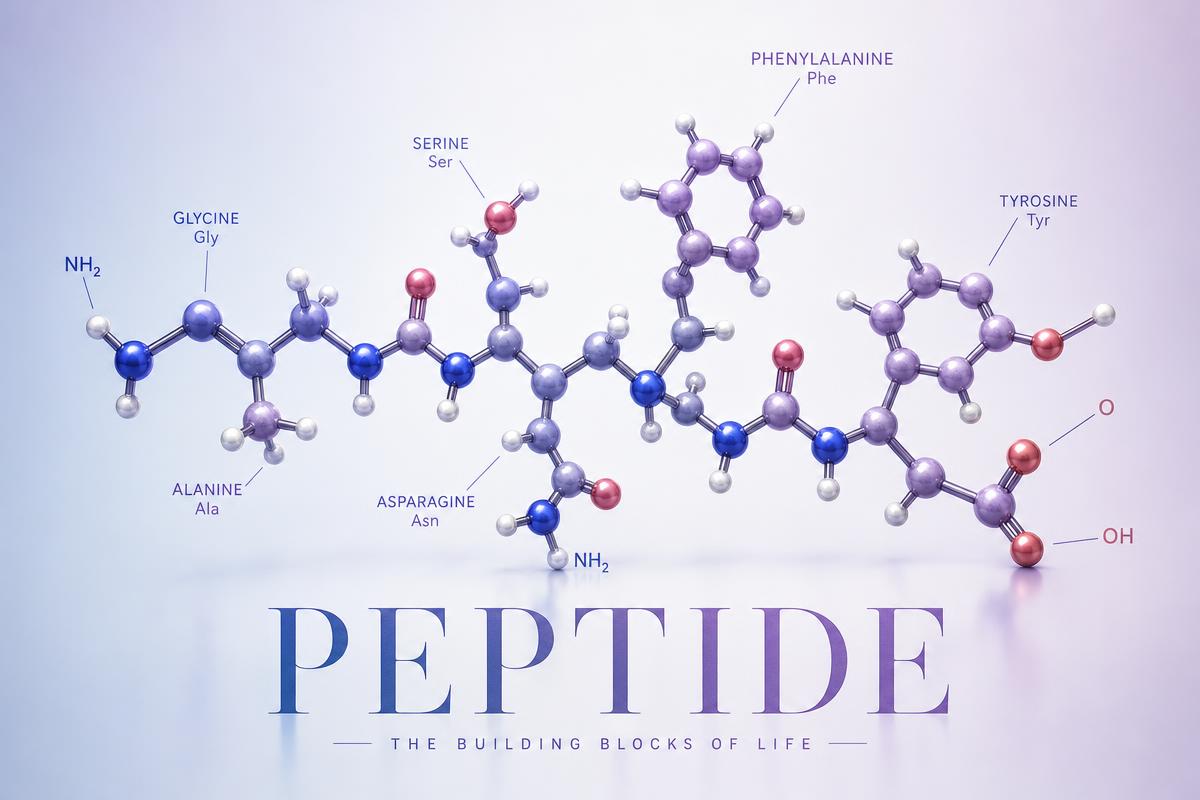
Retatrutide is the generic name of the molecule first described in the literature as LY3437943.[01] It is a synthetic peptide developed by Eli Lilly and Company and studied in clinical trials for obesity and type 2 diabetes.[01][02][03][04] It is one molecule, not a combination product: the same peptide backbone carries the activity at all three receptors.[01][15]
Two points about naming are worth settling early, because both circulate widely.
"Triple incretin" is imprecise
The incretin hormones are GIP and GLP-1 — gut hormones released in response to food that potentiate insulin secretion. Glucagon is a pancreatic hormone with largely opposing metabolic actions and is not an incretin. A molecule engaging GIP, GLP-1 and glucagon receptors is therefore a triple hormone receptor agonist, which is also how the peer-reviewed literature frames it.[01][02]
"GLP-3" is a media nickname, not a drug class
Retatrutide is sometimes called "GLP-3" in press coverage and marketing copy, as though it were the third member of a GLP series. There is no hormone or receptor class called GLP-3 in the pharmacology of these compounds; the term does not appear in the primary literature describing retatrutide.[01][02][15] Treat it as an inaccurate nickname.
How does retatrutide work?
Discovery pharmacology and later structural work support agonist activity at the GLP-1, GIP and glucagon receptors by the same molecule.[01][15] Structural analysis has described how retatrutide engages each of the three receptors, which is the mechanistic basis for calling it a balanced triple agonist rather than a GLP-1 drug with incidental extra activity.[15]
What that does not establish is how much of any clinical outcome each receptor contributes. Human trials administer the whole molecule; they cannot isolate the individual receptor arms.[02][04] Preclinical work investigated glucagon-receptor engagement in relation to energy expenditure,[01] but that is a preclinical line of investigation, not a demonstrated isolated mechanism in people. Any confident statement that retatrutide "burns fat through the glucagon receptor" in humans goes beyond the published evidence.
For the same reason, this article does not claim that retatrutide "boosts metabolism" or guarantees appetite suppression. The published outcomes are body weight, glycaemic measures and adverse-event rates in defined trial populations — not mechanistic promises.
What does the clinical evidence show?
The evidence base has two clearly different tiers. Peer-reviewed publications describe the Phase 1/2 work and, since 2026, one Phase 3 diabetes trial. The large Phase 3 obesity programme is, in the sources reviewed here, still at the stage of manufacturer press releases and congress presentations. The table separates them.
Doses shown below are research arms from controlled trials. They are not usage guidance, and this page gives no administration, titration or reconstitution information.
| Trial | Design & population | Duration | Evidence level | Reported body-weight change |
|---|---|---|---|---|
| Phase 2 obesity trial[02] | Randomised, double-blind, placebo-controlled; 338 adults with obesity, or overweight plus a weight-related condition, without diabetes | 48 weeks | Peer-reviewed (New England Journal of Medicine) | Mean at week 48: 1 mg −8.7%; combined 4 mg arms −17.1%; combined 8 mg arms −22.8%; 12 mg −24.2%; placebo −2.1% |
| TRANSCEND-T2D-1[04] | Randomised, double-blind, placebo-controlled Phase 3; adults with type 2 diabetes inadequately controlled with diet and exercise alone | 40 weeks | Peer-reviewed (The Lancet, 2026) | Statistically significant improvements in HbA1c and body weight versus placebo |
| TRIUMPH-1 (NCT05929066)[05][06] | Randomised, double-blind, placebo-controlled Phase 3 master trial; 2,339 adults with obesity or overweight and at least one weight-related comorbidity, without diabetes | 80 weeks, with a prespecified extension in a selected subset | Manufacturer-reported topline results and congress presentation; not yet a full peer-reviewed publication in the sources reviewed | Efficacy-estimand mean at week 80: 4 mg −19.0%; 9 mg −25.9%; 12 mg −28.3%; placebo −2.2% |
| TRIUMPH-2 (NCT05929079)[07][09] | Phase 3; 1,152 adults with type 2 diabetes and obesity or overweight | 80 weeks | Manufacturer-reported topline results; not yet a full peer-reviewed publication | Efficacy-estimand mean: 4 mg −12.7%; 9 mg −19.1%; 12 mg −20.8%; placebo −4.0%. Mean HbA1c change: −1.4, −1.6 and −1.5 percentage points versus −0.2 with placebo |
| TRIUMPH-3 (NCT05882045)[08][09] | Phase 3; 1,949 adults with severe obesity and established cardiovascular disease, with or without type 2 diabetes | 80 weeks | Manufacturer-reported topline results; not yet a full peer-reviewed publication | Efficacy-estimand mean: 9 mg −21.6%; 12 mg −22.6%; placebo −3.2% |
| TRIUMPH-4 (NCT05931367)[10][11] | Phase 3; 445 adults with obesity or overweight and knee osteoarthritis, without diabetes | 68 weeks | Manufacturer-reported topline results; not yet a full peer-reviewed publication | Efficacy-estimand mean: 9 mg −26.4%; 12 mg −28.7%; placebo −2.1% |
All of the figures above are group averages from controlled trials, not expected individual results. In TRIUMPH-4, WOMAC pain outcomes improved alongside weight change; where those analyses are reported as percentage change they are labelled post hoc by the manufacturer, and retatrutide is not an approved treatment for osteoarthritis.[11]
How to read this evidence
- A peer-reviewed paper and a press release are not the same evidence level. The Phase 2 obesity trial and the 2026 Phase 3 diabetes trial went through journal review;[02][04] the TRIUMPH obesity results, at the time of checking, were manufacturer announcements.[06][09][11]
- A trial registry confirms design and status, not outcomes. ClinicalTrials.gov records let you verify that a trial exists, whom it enrolled and how long it ran;[05][07][08][10] they do not independently validate unpublished results.
- The sponsor is not a neutral party. Eli Lilly sponsored the main development programme, and several authors of the published papers are Lilly employees or Lilly-funded investigators.[02][04][14]
- Cross-trial percentages are not comparable. Populations, durations and statistical estimands differ between these trials; lining up percentages from different studies produces a misleading ranking.
- Averages do not predict individuals. A −28.3% mean describes a randomised group, not a person.
- No superiority claim over semaglutide or tirzepatide follows from separate placebo-controlled trials.
Understanding the 2026 Phase 3 results
TRIUMPH-1 is the trial most often quoted, and it is also the one most often misquoted. The randomised population was 2,339 adults with obesity, or overweight with at least one weight-related comorbidity, and without diabetes, followed for 80 weeks.[05][06]
The widely repeated −30.3% at week 104 figure does not describe that population. It comes from a prespecified extension in a subset of 532 participants with a baseline BMI of 35 or above who completed the main study period and tolerated their assigned treatment.[06] A selected, treatment-tolerant subset with higher baseline BMI followed for longer is not the same thing as the full randomised cohort, and presenting the two as interchangeable overstates the result.
The week-80 efficacy-estimand means for the randomised trial are the figures in the table above.[06] An efficacy estimand describes what happens under continued treatment; a treatment-regimen estimand includes people who stopped. Mixing figures from the two estimands — or from different trials — produces numbers that do not mean what they appear to mean.
Cardiovascular outcomes are not established
TRIUMPH-3 enrolled adults with severe obesity and established cardiovascular disease.[08][09] The manufacturer reported a MACE-5 hazard ratio of 0.82 (95% CI 0.55–1.22) and a MACE-3 hazard ratio of 1.12 (95% CI 0.64–1.96).[09] Both confidence intervals include 1, which means these analyses do not establish cardiovascular benefit and do not establish harm. Retatrutide should not be described as cardioprotective on this basis.
What is known about side effects?
The peer-reviewed Phase 2 obesity trial reported that gastrointestinal events were the most common adverse events, that they were dose-related and mostly mild to moderate, and that dose-dependent heart-rate increases peaked around week 24 and declined afterwards.[02]
For TRIUMPH-1, the manufacturer's topline release reported the following rates across retatrutide groups versus placebo:[06]
- Nausea: 28.6%–42.4% versus 14.8%
- Diarrhoea: 25.2%–34.1% versus 13.5%
- Constipation: 23.8%–26.1% versus 10.9%
- Vomiting: 10.6%–25.3% versus 4.8%
- Dysesthesia: 5.1%–12.5% versus 0.9%
- Discontinuation due to adverse events: 4.1%–11.3% versus 4.9%
Several caveats belong with those numbers. Topline safety data are not a substitute for full peer-reviewed reporting.[06][09] Rare and long-term adverse effects require larger populations and longer follow-up than any completed retatrutide trial provides. There is no approved prescribing information for retatrutide anywhere,[13][14] so there is no authoritative document listing contraindications, interactions or monitoring requirements — and contraindications from semaglutide or tirzepatide labels cannot simply be transferred to a different molecule. This page deliberately gives no titration or self-administration schedule.
Is retatrutide FDA approved?
No. As of 1 September 2026:
- Retatrutide is investigational.[14]
- It is not FDA approved, and Lilly states that it has not been approved by any regulatory agency.[14]
- Lilly announced that it plans to submit a Biologics License Application to the FDA in the first quarter of 2027.[06] A planned submission is not an accepted application, not an approval, and not a guaranteed launch date.
- The FDA states that retatrutide is not a component of an FDA-approved drug and has not been found to be safe and effective for any condition.[13]
- The FDA states that retatrutide cannot be used in compounding under United States federal law.[13]
- The FDA has warned about unapproved products marketed with labels such as "research use only" or "not for human consumption".[13]
Because there is no approved product, there is no legitimate route for members of the public to obtain retatrutide for personal use. This article gives no supplier names, prices, purchasing routes, storage instructions for consumer use or human-use instructions.
Retatrutide versus semaglutide and tirzepatide
| Compound | Receptor targets | Status |
|---|---|---|
| Semaglutide | GLP-1 receptor | Approved products exist for specific indications |
| Tirzepatide | GIP and GLP-1 receptors | Approved products exist for specific indications |
| Retatrutide | GIP, GLP-1 and glucagon receptors | Investigational; not approved[14] |
A dedicated Phase 3 study, TRIUMPH-5 (NCT06662383), is comparing retatrutide directly with tirzepatide in adults with obesity. Lilly lists the trial as running through December 2026.[12] No head-to-head outcome should be claimed before verified results are available — and separate placebo-controlled trials cannot substitute for that comparison. There is no "winner" to report here, and an investigational molecule is not better than an approved medicine simply because a press release quotes a larger percentage.
What is still unknown?
- Whether the 2026 Phase 3 obesity results survive full peer review as reported.[06][09][11]
- How much each of the three receptors contributes to the observed outcomes in humans.[01][15]
- Whether any cardiovascular effect exists: the TRIUMPH-3 confidence intervals are inconclusive in both directions.[09]
- What happens beyond roughly two years, and what happens after stopping.
- Rare adverse events, which no trial of this size and duration can rule out.
- How retatrutide performs against tirzepatide, pending TRIUMPH-5.[12]
- Whether and when any regulator accepts a submission, let alone approves one.[06][13][14]
Frequently asked questions
What is retatrutide?
An investigational peptide, also known as LY3437943, that acts as an agonist at the GIP, GLP-1 and glucagon receptors and has been studied for obesity and type 2 diabetes.[01][02][04]
Is retatrutide FDA approved?
No. It is investigational, has not been approved by any regulatory agency, and the FDA states it has not been found safe and effective for any condition.[13][14]
Is retatrutide the same as tirzepatide?
No. Tirzepatide targets the GIP and GLP-1 receptors and approved products exist; retatrutide adds glucagon-receptor activity and remains investigational.[01][14]
Is "GLP-3" a scientific name?
No. It is an inaccurate media nickname. The primary literature describes retatrutide as a triple hormone receptor agonist at GIP, GLP-1 and glucagon receptors.[01][02][15]
How much weight did participants lose in trials?
In the peer-reviewed Phase 2 trial, mean change at 48 weeks ranged from −8.7% (1 mg) to −24.2% (12 mg) versus −2.1% with placebo.[02] Manufacturer-reported TRIUMPH-1 week-80 efficacy-estimand means were −19.0% to −28.3% versus −2.2%.[06] These are group averages, not individual expectations.
Can retatrutide legally be purchased for public use?
No. There is no approved retatrutide product, the FDA states it cannot be used in compounding, and the agency has warned about unapproved products marketed as "research use only".[13]
When might retatrutide become available?
No approval or launch date is guaranteed. The only documented step is Lilly's statement that it plans to submit a Biologics License Application to the FDA in the first quarter of 2027.[06]
Editorial conclusion
Retatrutide is one of the more substantial metabolic research programmes of the decade, and the most defensible summary is also the least dramatic. A single peptide engages three receptors;[01][15] peer-reviewed trials show meaningful average reductions in body weight and improvements in glycaemic control;[02][03][04] the largest obesity results are still manufacturer topline announcements;[06][09][11] the cardiovascular question is open;[09] and the compound is approved nowhere.[13][14]
Everything else circulating about retatrutide — the "GLP-3" label, the −30.3% figure quoted as a whole-trial result, the head-to-head claims against approved medicines — is either a naming error or a reporting error. This entry will be revised when the TRIUMPH publications and the TRIUMPH-5 comparison are available in peer-reviewed form.
04
Sources
- [01]Coskun T, et al. LY3437943, a novel triple glucagon, GIP, and GLP-1 receptor agonist for glycemic control and weight loss. Cell Metabolism. 2022. doi:10.1016/j.cmet.2022.07.013
- [02]Jastreboff AM, et al. Triple-Hormone-Receptor Agonist Retatrutide for Obesity — A Phase 2 Trial. New England Journal of Medicine. 2023. doi:10.1056/NEJMoa2301972
- [03]Rosenstock J, et al. Retatrutide in people with type 2 diabetes: a Phase 2 randomised trial. The Lancet. 2023. doi:10.1016/S0140-6736(23)01053-X
- [04]Bajaj HS, et al. TRANSCEND-T2D-1: Phase 3 trial of retatrutide in type 2 diabetes. The Lancet. 2026. doi:10.1016/S0140-6736(26)00967-0
- [05]TRIUMPH-1 trial registry record, NCT05929066 (ClinicalTrials.gov)
- [06]Eli Lilly — TRIUMPH-1 topline results, 21 May 2026. Company-reported; not yet fully peer-reviewed.
- [07]TRIUMPH-2 trial registry record, NCT05929079 (ClinicalTrials.gov)
- [08]TRIUMPH-3 trial registry record, NCT05882045 (ClinicalTrials.gov)
- [09]Eli Lilly — TRIUMPH-2 and TRIUMPH-3 topline results, 23 July 2026. Company-reported; not yet fully peer-reviewed.
- [10]TRIUMPH-4 trial registry record, NCT05931367 (ClinicalTrials.gov)
- [11]Eli Lilly — TRIUMPH-4 topline results, 11 December 2025. Company-reported; not yet fully peer-reviewed.
- [12]TRIUMPH-5 head-to-head trial versus tirzepatide, NCT06662383 (ClinicalTrials.gov)
- [13]FDA — Concerns with unapproved GLP-1 drugs used for weight loss (includes retatrutide)
- [14]Eli Lilly — What to know about retatrutide, last updated July 2026. Manufacturer source, not independent evidence.
- [15]Li W, et al. Structural analysis of retatrutide engagement with GLP-1R, GIPR and GCGR. Cell Discovery. 2024. doi:10.1038/s41421-024-00700-0
05
Cite this entry
- Identifier
- TPL.2026.4153
The Peptide Lens Desk. (2026). What Is Retatrutide? Mechanism, Phase 3 Results and Approval Status. The Peptide Lens. /journal/retatrutide-and-the-architecture-of-triple-incretin-agonism
DOI registration pending — cite the identifier and canonical URL. Indexed for Google Scholar via Highwire Press, Dublin Core and PRISM metadata.
PubMed / MEDLINE record and NLM JATS full-text XML are available for harvesting; PubMed listing itself requires an ISSN and NLM acceptance.
Continue reading

Research · 11 min read
BPC-157: What the Preclinical Evidence Shows and Why No Human Trial Data Exists
Research · 12 min read
Growth Hormone Secretagogues: One Approved Drug, Several Research Compounds, and the Difference
Research · 10 min read