Notebook entry
2026.08.31 / EVALUATING-I
Evaluating Ipamorelin: Selectivity, Endocrine Dynamics, and Preclinical Evidence
- Field
- Research
- Logged
- 31 August 2026
- Reading time
- 4 min read
- References
- 2
- Source language
- EN
- Identifier
- TPL.2026.0525
01
Summary
An editorial analysis of ipamorelin, examining its ghrelin-receptor selectivity, pulsatile growth hormone secretagogue profile, preclinical data on bone and gut motility, and key analytical considerations for research environments.
02
Methods
Desk review: published literature, manufacturer documentation and analytical certificates are read side by side. Claims without a traceable reference are marked as open questions, not conclusions.
03
Results
Introduction to Selective Growth Hormone Secretagogues
In the evolving landscape of peptide research, growth hormone secretagogues (GHS) represent a class of molecules engineered to stimulate the endogenous release of growth hormone (GH) from the anterior pituitary gland. Early iterations of these compounds, such as GHRP-6 and GHRP-2, demonstrated robust efficacy in elevating GH levels but frequently induced collateral stimulation of other pituitary axes. Specifically, these early agents were observed to trigger transient elevations in adrenocorticotropic hormone (ACTH), cortisol, and prolactin.
Ipamorelin—a synthetic pentapeptide with the sequence Aib-His-D-2Nal-D-Phe-Lys-NH2—was developed to address these specificity limitations. Recognized for its high selectivity for the growth hormone secretagogue receptor (GHS-R1a), ipamorelin has become a prominent subject of preclinical investigation. This desk review examines the established pharmacological mechanisms, documented physiological impacts, and analytical requirements surrounding ipamorelin in contemporary scientific literature.
Mechanistic Profile and Receptor Selectivity
Ipamorelin functions as a selective agonist of the GHS-R1a receptor, mimicking the activity of endogenous ghrelin. Upon binding, it initiates an intracellular signaling cascade mediated by phospholipase C, leading to an influx of intracellular calcium and subsequent exocytosis of stored growth hormone from somatotroph cells in the pituitary gland.
What distinguishes ipamorelin from earlier hexapeptides is its functional selectivity. Comparative bioassays demonstrate that ipamorelin induces somatotroph depolarization without concurrently stimulating the release of ACTH or cortisol, even at dosages significantly exceeding the half-maximal effective concentration ($EC_{50}$). Furthermore, plasma prolactin levels remain stable during ipamorelin administration in animal models, minimizing the endocrine off-target effects that historically complicated research into secretagogue-mediated pathways.
Preclinical Literature: Bone Density and Gastrointestinal Motility
Preclinical research involving ipamorelin has primarily focused on two distinct physiological targets: bone metabolism and gastrointestinal motility.
Bone Mineral Density and Collagen Synthesis
In rodent models of osteopenia and longitudinal bone growth, ipamorelin administration has been evaluated for its capacity to stimulate bone mineral content. Research indicates that sustained exposure to elevated endogenous GH via secretagogue stimulation promotes osteoblast proliferation and type I collagen expression. In comparative studies with recombinant human growth hormone (rhGH), ipamorelin demonstrated similar efficacy in enhancing longitudinal bone growth rates in Sprague-Dawley rats, while preserving natural physiological pulsatility.
Postoperative Ileus and Motility Models
Beyond its somatotrophic activity, ipamorelin's affinity for ghrelin receptors in the enteric nervous system prompted investigation into gastrointestinal applications. Preclinical trials evaluated its ability to restore normal gastric emptying in models of postoperative ileus (POI). Results indicated that ipamorelin significantly accelerated gastric transit times following surgical manipulation of the bowel. While early-phase clinical trials were conducted to assess its utility in reducing the duration of postoperative bowel dysfunction in surgical patients, commercial development for this specific indication was ultimately halted, leaving the compound primarily in the domain of translational research.
Pharmacokinetic Behavior and Endocrine Specificity
Understanding the pharmacokinetic dynamics of ipamorelin is crucial for evaluating its experimental utility. Unlike exogenously administered rhGH, which causes prolonged elevations in circulating GH and can downregulate endogenous production via feedback loops, ipamorelin exhibits a relatively short terminal elimination half-life (approximately 2 hours in rodent models).
This transient duration of action produces an acute spike in GH secretion that mimics the natural pulsatile profile observed in physiological states. Consequently, circulating insulin-like growth factor 1 (IGF-1) levels rise downstream in a dose-dependent manner without the sustained suppression of the hypothalamic-pituitary-somatotropic axis often observed with direct hormone administration.
Safety Considerations and Theoretical Risks
While ipamorelin displays a superior selectivity profile compared to first-generation secretagogues, rigorous research standards require consideration of potential systemic risks associated with GH axis modulation:
- Glycemic Dynamics: Chronic elevation of the GH/IGF-1 axis can induce peripheral insulin resistance through increased lipolysis and altered glucose utilization in skeletal muscle. While ipamorelin's short half-life mitigates persistent hyper-somatotrophic states, research protocols monitoring metabolic markers routinely evaluate fasting blood glucose and baseline insulin sensitivity.
- Neoplastic Potential: GH and IGF-1 are potent mitogenic and anti-apoptotic factors. Although ipamorelin is not inherently mutagenic, elevated systemic IGF-1 levels present theoretical risks in settings with pre-existing occult dysplasias or active malignancies.
- Desensitization and Receptor Downregulation: Continuous, non-pulsatile exposure to GHS-R1a agonists can lead to receptor internalisation and tachyphylaxis. Research designs typically incorporate wash-out periods or cyclic dosing regimens to preserve receptor sensitivity over extended evaluation periods.
Analytical Rigor in Research Settings
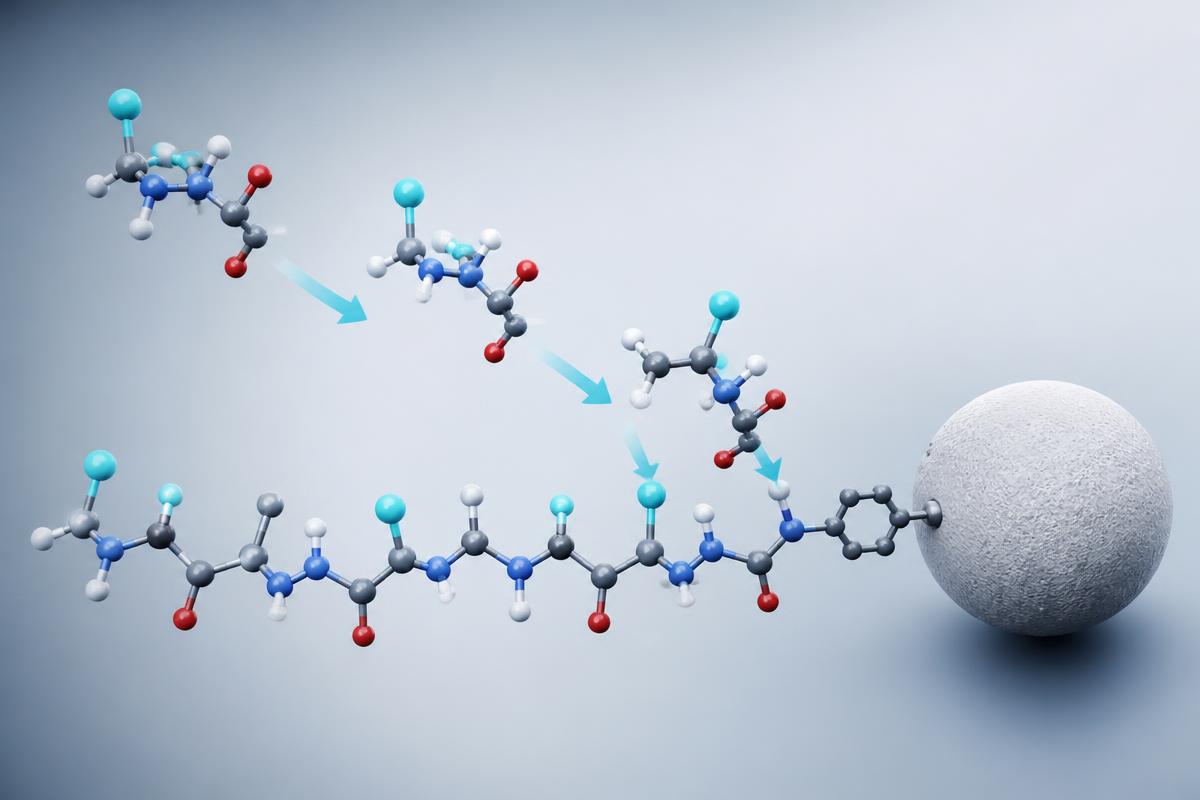
For research laboratories studying peptide pharmacodynamics, material purity and structural integrity are critical parameters. Peptides manufactured via solid-phase peptide synthesis (SPPS) are prone to specific chemical impurities, including truncated sequences, deletion peptides, and residual TFA (trifluoroacetic acid) counter-ions.
Assessing ipamorelin in experimental assays requires verification through High-Performance Liquid Chromatography (HPLC) and Mass Spectrometry (MS) to ensure sequence purity (>98%) and identity. Additionally, residual TFA content must be characterized, as high TFA concentrations can induce cellular toxicity in primary cell cultures, skewing in vitro safety and efficacy readings.
Conclusion
Ipamorelin remains an essential reference compound for investigating selective pituitary stimulation and GHS-R1a receptor kinetics. Its primary advantages—high specificity, lack of cortisol/prolactin induction, and preservation of pulsatile GH dynamics—render it a valuable tool in preclinical models of bone density, metabolic regulation, and tissue repair. Continued rigorous investigation utilizing validated analytical-grade material remains necessary to fully characterize its downstream cellular pathways.
Sourcing note: laboratories comparing batch documentation can review research peptides with batch certificates of analysis for reference material.
04
Sources
05
Cite this entry
- Identifier
- TPL.2026.0525
The Peptide Lens Desk. (2026). Evaluating Ipamorelin: Selectivity, Endocrine Dynamics, and Preclinical Evidence. The Peptide Lens. /journal/evaluating-ipamorelin-selectivity-endocrine-dynamics-and-preclinical-e
DOI registration pending — cite the identifier and canonical URL. Indexed for Google Scholar via Highwire Press, Dublin Core and PRISM metadata.
PubMed / MEDLINE record and NLM JATS full-text XML are available for harvesting; PubMed listing itself requires an ISSN and NLM acceptance.
Continue reading

Research · 11 min read
BPC-157: What the Preclinical Evidence Shows and Why No Human Trial Data Exists
Research · 12 min read
Growth Hormone Secretagogues: One Approved Drug, Several Research Compounds, and the Difference
Research · 10 min read