Notebook entry
2026.08.31 / BEYOND-THE-C
Beyond the Celebrity Spotlight: A Scientific Evaluation of Peptide Signaling and Dermal Remodeling
- Field
- Longevity
- Logged
- 31 August 2026
- Reading time
- 6 min read
- References
- 1
- Source language
- EN
- Identifier
- TPL.2026.0869
01
Summary
A critical, evidence-first assessment of injectable, topical, and oral peptide modalities popularized in mainstream anti-aging discussions, evaluating their pharmacokinetic realities and cellular mechanisms.
02
Methods
Desk review: published literature, manufacturer documentation and analytical certificates are read side by side. Claims without a traceable reference are marked as open questions, not conclusions.
03
Results
In recent years, public interest in targeted longevity interventions has shifted from broad lifestyle modifications to specific biochemical protocols. High-profile endorsements—frequently referencing weekly peptide injections, specialized collagen supplements, and topical signal molecules—have placed peptide therapeutics at the center of mainstream anti-aging discourse. However, popular media narratives often conflate preliminary cell-culture findings, anecdotal reports, and robust human clinical data. To understand the actual biological efficacy of these compounds, one must separate consumer market framing from molecular pharmacology, tissue kinetics, and dermatological evidence.
Systemic Signaling: Pituitary Axis and Tissue Regeneration
Central to many advanced longevity discussions is the administration of systemic peptides designed to modulate endogenous endocrine pathways. Secretagogues targeting the growth hormone (GH) axis, such as Sermorelin, CJC-1295, and Ipamorelin, act on pituitary receptors to stimulate pulsatile releases of growth hormone, subsequently elevating systemic Insulin-like Growth Factor 1 (IGF-1). In tissue culture and animal models, optimal IGF-1 signaling correlates with heightened fibroblast proliferation, accelerated extracellular matrix (ECM) protein synthesis, and enhanced muscular recovery.
However, translation to human cutaneous aging presents nuanced challenges. While systemic GH stimulation can improve lean muscle mass and fluid retention in deficient populations, its capacity to reverse structural, UV-induced photoaging in immunocompetent, age-matched healthy subjects remains under investigation. Furthermore, systemic administration carries physiological trade-offs, including potential alterations in glucose tolerance and fluid dynamics. Consequently, claiming that systemic peptide injections offer a universal anti-aging solution oversimplifies complex endocrine feedback loops that require strict analytical monitoring.
Oral Collagen Hydrolysates: Dipeptide Signaling vs. Digestion
Another staple of popular anti-aging regimens is the daily consumption of hydrolyzed collagen peptides. Critics historically argued that oral proteins are entirely broken down into individual amino acids during gastrointestinal digestion, rendering them functionally identical to general dietary protein. Modern pharmacokinetic research, however, demonstrates that specific bioactive dipeptides and tripeptides—most notably Proline-Hydroxyproline (Pro-Hyp) and Hydroxyproline-Glycine (Hyp-Gly)—partially resist enzymatic cleavage.
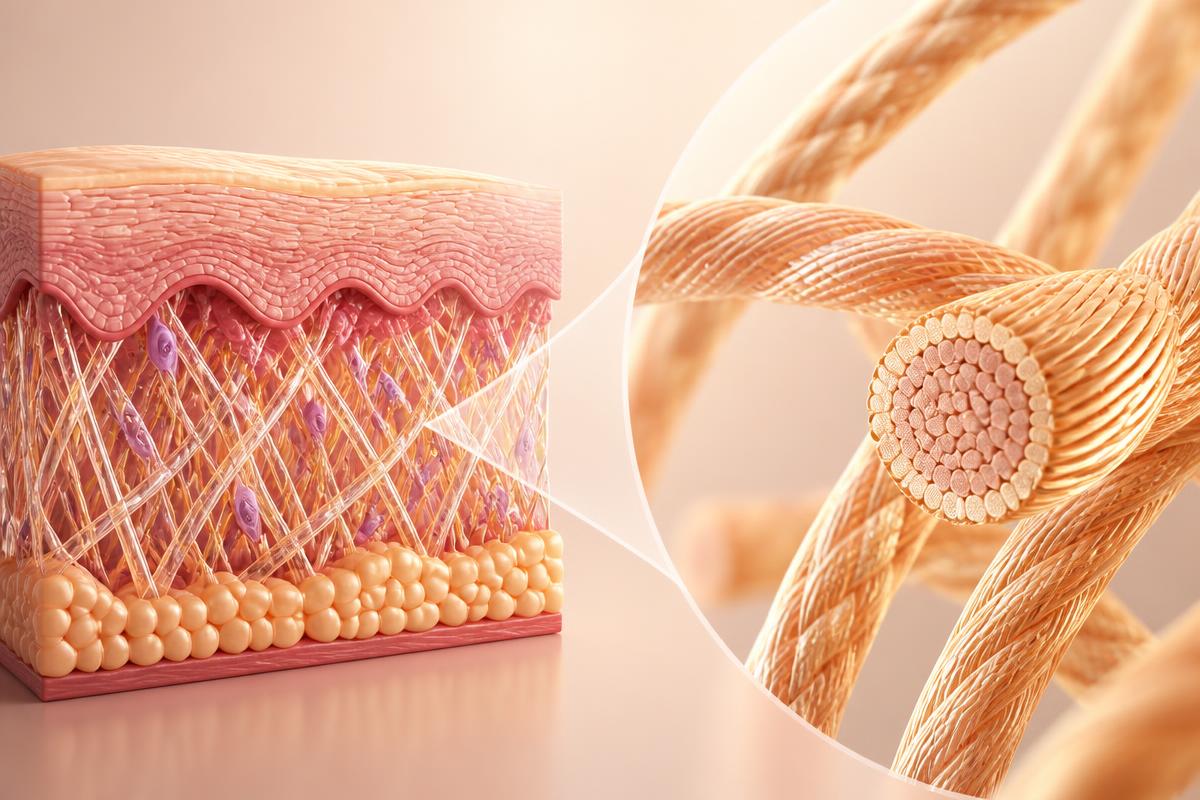
These intact dipeptides are absorbed through the intestinal epithelium via the peptide transporter 1 (PepT1) pathway and circulate systemically. Radiotracer studies indicate that Pro-Hyp selectively accumulates in cutaneous tissues, where it functions not merely as a structural substrate for collagen synthesis, but as a chemotactic signal. This signaling cascade triggers dermal fibroblasts to upregulate hyaluronic acid synthases and expression of collagen type I and III genes. While clinical trials demonstrate modest improvements in skin hydration, elasticity, and dermal density after 8 to 12 weeks of standardized oral supplementation, outcomes remain dependent on molecular weight distribution, enzymatic processing techniques, and baseline nutritional status.
Topical Peptides and the Stratum Corneum Barrier
Topical formulations claiming to deliver peptide signalers represent a vast segment of the aesthetic market. Common ingredients include Palmitoyl Pentapeptide-4 (Matrixyl) and Copper Tripeptide-1 (GHK-Cu). GHK-Cu, a naturally occurring tripeptide found in human plasma, plays a documented role in wound healing, tissue remodeling, and modulating inflammatory cytokines. It stimulates metalloproteinases and their inhibitors, regulating the balance between ECM degradation and repair.
The fundamental challenge for topical formulations is the stratum corneum—the outermost barrier of the epidermis. Under normal physiological conditions, hydrophilic molecules with a molecular weight exceeding 500 Daltons cannot passively penetrate intact skin. Unmodified peptides typically fail to reach the deep dermal layers where active fibroblasts reside. To overcome this limitation, pharmaceutical formulations employ lipophilic modifications (such as palmitoylation), liposomal encapsulation, or micro-needling delivery systems. Without these advanced delivery strategies, topical peptide applications remain restricted to superficial epidermal hydration rather than deep matrix remodeling.
Comparative Overview of Peptide Administration Modalities
| Modality | Primary Target / Mechanism | Bioavailability & Delivery Factors | Clinical Evidence Level |
|---|---|---|---|
| Injectable Secretagogues (e.g., CJC-1295, Ipamorelin) | Stimulation of pituitary GH/IGF-1 axis; systemic tissue repair. | High systemic bioavailability; bypasses GI tract; requires careful dose titration. | Moderate in hormone deficiency; experimental for healthy anti-aging. |
| Oral Hydrolysates (Bioactive Collagen Peptides) | Intestinal PepT1 transport; fibroblast activation via Pro-Hyp signaling. | Moderate; dependent on enzymatic hydrolysis quality and molecular size. | Moderate to High for skin hydration and density in controlled trials. |
| Topical Synthetics (e.g., Palmitoyl Pentapeptide-4, GHK-Cu) | Local upregulation of ECM proteins; modulation of matrix metalloproteinases. | Low passive absorption; requires lipophilic conjugations or mechanical delivery. | Moderate for fine line reduction; limited by epidermal penetration depth. |
Methodological Limitations and Quality Control
A persistent issue within both popular commentary and academic literature is the variability of compound quality. Research evaluating peptide efficacy relies on high-purity sequences verified through High-Performance Liquid Chromatography (HPLC) and Mass Spectrometry (MS). In contrast, consumer supply chains frequently suffer from inconsistent peptide purity, degradation due to thermal instability, or inaccurate concentration labelling. Furthermore, short-term trials often measure surrogate endpoints—such as superficial hydration—rather than long-term structural changes in dermal collagen architecture.
Ultimately, while peptides represent a legitimate frontier in molecular pharmacology and regenerative biology, public enthusiasm frequently outpaces rigorous scientific verification. Disentangling public relations narratives from validated biological pathways requires continuous, peer-reviewed evaluation of dosing kinetics, delivery mechanisms, and long-term safety profiles.
Sourcing note: laboratories comparing batch documentation can review research peptides with batch certificates of analysis for reference material.
04
Sources
05
Cite this entry
- Identifier
- TPL.2026.0869
The Peptide Lens Desk. (2026). Beyond the Celebrity Spotlight: A Scientific Evaluation of Peptide Signaling and Dermal Remodeling. The Peptide Lens. /journal/beyond-the-celebrity-spotlight-a-scientific-evaluation-of-peptide-sign
DOI registration pending — cite the identifier and canonical URL. Indexed for Google Scholar via Highwire Press, Dublin Core and PRISM metadata.
PubMed / MEDLINE record and NLM JATS full-text XML are available for harvesting; PubMed listing itself requires an ISSN and NLM acceptance.